Monday, 29 February 2016

Gig review: Therapy? - Infernal Love Tour, Northumbria University, 27/02/16

Therapy? - Infernal Love Tour, Northumbria University, 27/02/16

Much like the subject of today's review, I don't like repeating myself. I wrote a glowing review of Therapy? last time they graced my hometown, so I'm going to have to think of a fresh approach which doesn't rely on me heaping praise on a band you've never heard of in a vain attempt to sound clever. Let's face it, that's all I ever really do since I rarely go see bands that I don't like. Having ran out of superlatives in my last review of a Therapy? gig in Newcastle, I'll try to keep this one objective, factual and brief. Here are some facts, most or which relate in some way to the events of Saturday 27th February:

  • I love Therapy? They've been there for me through every major event of my life since I was 15 and their name works on more than one level for me. I have a tattoo of their logo on my arm.
  • Tonight they were playing their 1995 album Infernal Love from start to finish, as part of an ongoing 20-year celebration. It's a fan favourite these days, having been largely unappreciated on release.
  • While Troublegum was the album which stole my heart, Infernal Love was the first one I bought.
  • This makes me feel old.
  • I met some friends in Trillians before the show. Drinks were downed. We moved on to The Five Swans by mistake.
  • The Five Swans was full of posh looking, extremely rude students who were dressed like they had just returned from a fox hunt or Tory conference. And people watching rugby.
  • 'Hunt' rhymes with the word I used to describe them. Realising our mistake, we left in search of food (two drinks later).
  • The kebab wraps in Munchies are spectacular and I wish I had another one right now.
  • The venue was worryingly empty when we arrived.
  • Opening band The Membranes didn't play terribly well, were let down by some questionable sound, but were more interesting than 90% of the other punk bands of their era. More cerebral than snotty, their influence on Therapy? is obvious.
  • With the absolute minimum amount of fucking about, Therapy? played Infernal Love from start to finish.
  • It was glorious.
  • 'Me Vs. You' is an incredibly sinister piece of music and they should play it more often.
  • Their 'encore' was an entire set of other songs, starting with 'Still Hurts', taking in 'Potato Junkie', 'Tides', 'Teethgrinder', 'Helpless, Still Lost', and 'Screamager' among others on the way to a resounding 'Nowhere'.
  • Jumping up and down on the spot is fucking exhausting.
  • I can't sing but that doesn't stop me from trying.
  • Two days later, my actions of the night of the 27th are still causing me some pain.
  • It is entirely possible that I'm too old for this shit.

Ok, that was easy. I'll try to stay objective from here to the end.

They played impeccably well. Rhythm section Michael McKeegan and Neil Cooper do so much more than simply keep time; the fat bass sound and drumming flourishes add so much to the dark personality Andy Cairns brings to the guitar and vocals. This is a band in top form: tight, precise and clearly still loving being on stage even at this point in their lives. Promising to return to a city they apparently have a lot of affection for, they are grateful to an impressed crowd (which thankfully filled out a lot) and even throw in a cover of The Police's 'Message In A Bottle' to say thank you.

It's unlikely that they'll do a tour to celebrate the less loved Semi-Detached album, or any of their subsequent releases for that matter, but if they do you know where I'll be.


I grow weary of this objectivity (not that I did a very good job of it...) . It's my review and I can sound clever with words like hyperbole all I want! Therapy? are untouchable. There's a good reason they remain my favourite band after all these years, and I won't get tired of repeating myself about them. Until next year...

Saturday, 20 February 2016

Art vs. Outrage: Phil Anselmo, John Lennon and the half life of controversy

Art vs. Outrage: Phil Anselmo, John Lennon and the half life of controversy


“One ought to be able to hold in one’s head simultaneously the two facts that Dali is a good draughtsman and a disgusting human being.” - George Orwell, Dickens, Dali and Others
Is it possible to dislike what a person stands for, believes in or does, yet still appreciate and enjoy what they produce? Does it(and should it) make it harder to like something if you know that the artist is someone or something you dislike? Can you appreciate talent objectively, with no consideration of whether you like the talented person in question?

Ok, I cheated a bit with the Orwell quote because he apparently didn't approve of Dali's art despite appreciating his talent, but I think the point still stands. My Ipod, in a cunning attempt to test me, played a song by Down the other day. Normally I like Down; a supergroup featuring members of Corrosion Of Conformity (ace), Crowbar (ace), Eyehategod (kind of ace) and fronted by Phil Anselmo of Pantera fame. Anselmo had recently been filmed affecting what appeared to be a Nazi salute and shouting what sounded distinctively like “White power” to the crowd. With this fresh in my memory, it felt distasteful to listen to something Anselmo had performed on and the song was skipped. My liberal sensibilities and conscience appeased, my ego started to nag at me, almost saying “but you like that song. You're allowed to listen to it, even if the singer is apparently a big racist.” By this time I had moved on to another tune and realised that an inner dialogue between conflicting parts of my psyche is probably not healthy while you're out buying teabags and oranges.

To put this into a more relateable context, take the example of John Lennon. I am not a Beatles fan by any stretch, but I can appreciate their influence on popular music and the many artists that followed them. I also appreciate John Lennon's anti-war stances and willingness to use his celebrity to promote peace, however much of a douchebag it made him sound. He was also shot on the day I was born, but that's another story. What isn't remembered or acknowledged about Lennon is that he allegedly had a tendency towards domestic violence among other unpleasant things. Like Anselmo's apparent racism, this is abhorrent and inexcusable behaviour. But is this forgotten because of Lennon's lingering cultural legacy, or simply because he's dead? Should you think of a bruised Cynthia Lennon every time you hear 'Imagine'? Should I think of a burning cross every time I listen to Pantera's 'Fucking Hostile'?

Not a Beatles fan? We'll take a look at some other examples of moral and legal crimes: Jimmy Page, according to Led Zeppelin biography Hammer Of The Gods (Stephen Davis, 1985), had a relationship with 14 year-old Lori Maddox; singer Chris Brown was charged with assaulting Rihanna in 2009; Tupac Shakur was awaiting sentencing for sexual assault at the time of his death; Lostprophets singer Ian Watkins was sentenced to prison for child sex offences; Pete Townsend and Bill Wyman have both been the subject of allegations regarding their sexual preferences; Metallica's James Hetfield apparently likes to shoot animals for fun; James Brown and Ike Turner were famously accused of domestic violence; Eminem has been accused of homophobic attitudes , not to mention domestic violence. Granted being a racist or homophobe, and shooting animals aren't criminal acts per se, but they're the sort of things that anger people and rightly so.

Millions of records sold between them. Millions of hero-worshipping fans around the world, and people inexplicably still buy Chris Brown records. Is it ok for me to dance to 'Get On Up', knowing that Brown may have had his wife's blood on his knuckles when he recorded it? Can I listen to 'Enter Sandman' knowing that my purchase probably contributed to the death of some poor bear. Am I still ok to listen to 'Stan', knowing that the man behind it is promoting backwards attitudes towards gay people? Sadly, I think the answer is yes. Time, it seems, is a great healer for better or for worse. I'll never be a Beatles fan but trying to imagine (pun intended) pop music without their legacy is difficult. Try to imagine the man who wrote 'Twist and Shout' smacking a woman around a hotel room.

Maybe it's the severity of the crime that drives the moral compass away from the record needle. You come across as a racist and people will rightly shun you, ostracise you from the community and as in the case of Anselmo promoters will refuse to have anything to do with you. Good. However if you beat your wife up, they'll make films of your life story and name airports after you. The weight of cultural legacy, it seems, outweighs social concern over treatment of women. Likewise, selling 100 million albums with Metallica means animal rights activists are quickly shouted down by 100 million voices, and being the world's foremost hip hop artist means you can be as homophobic as you like. Does this say more about social attitudes towards women, or did John Lennon just have a better publicist?

Take a look at another medium: director Roman Polanski is wanted for statutory rape in America and would be arrested were he ever to return. Does that dampen my enjoyment of Rosemary's Baby? Not one bit. Orson Welles was by all accounts a monster, particularly towards women; Alfred Hitchcock, a terrible misogynist, depending upon who you ask. Does this stop me marvelling in the artistry of Citizen Kane or Strangers On A Train? Not even slightly.

Does producing memorable art (however you cut it; I'm not getting into an argument about heavy metal being art) outweigh the crimes of the artist? It seems that our desire to be moved and entertained, to be made happy, outweighs our outrage. One thing to learn from these incidents is that generally the less you know about your heroes the better; you find something out about them that you don't like and it's harder to worship them. The example might seem a little trite but watching the Metallica documentary Some Kind Of Monster (Joe Berlinger, Bruce Sinofsky, 2004) made me realise that one of my favourite bands in the world is at least 50% comprised of petulant, spoiled, arrogant brats. Does that make me love them any less? No, but I do have to apply a degree of cognitive dissonance to forget who the people are behind the music.


Ultimately, we want to be entertained, or we wouldn't be buying the records to begin with. Personally, I find it difficult to overlook that the work I love may have been created by somebody I would hate, but if it's good enough, if I connect with it on the right level, that of, say, Master Of Puppets or Rosemary's Baby, then I can get over it. It may sound like a cop out, but quality goes a long way: John Lennon, Jimmy Page, James Brown, Pete Townsend are all beloved musicians, talented in their own way, and have made a difference to countless lives. Oddly enough, I haven't had the same moral dilemma when it comes to Lostprophets. Is this because of a 'worse' incident? No, I think it's just that hearing about it made me realise they were shit to begin with. Pantera weren't. For the time being at least, I'll miss the music, but not the man.

Monday, 1 February 2016

Gig Review: Cancer Bats, Newcastle Academy, 26/01/16


“So who are you going to see tonight?” people asked me out of politeness, not really caring bout the answer, half expecting it to be somebody they've never heard of.

I've been sheepishly responding “Cancer Bats,” expecting a twisted face at best, a 'what the fuck is wrong with you?' at worst.

People normally don't have much to say after hearing the name. But the name really shouldn't put people off because the Toronto quartet are gradually repairing a Canadian musical reputation so badly tainted by Bryan Adams, Celine Dion, Bieber and Nickelback. They have some work to do.

I had initially dismissed them as a less interesting Every Time I Die; kind of an unnecessary soundalike hardcore band. But I wasn't listening properly and across an impressive career (now on album no. 5) they've grown on me and now tickle my musical taste buds like maple syrup; the southern rock licks, the breakneck riffs the infectious grooves al gel together beautifully. Even the songs I didn't like before are now favourites of mine, such is the infectious energy and positivity these guys throw out at will. And that's the key thing: yes they're aggressive in their delivery but they are never less than positive and optimistic.
Image result for cancer bats
Arriving in time for appropriately-titled opening band Incite to close their set with some Pantera/Lamb Of God-like grooves and breakdowns coupled with DM vocals, I saw that the smaller Academy room was a lot fuller than that last time Cancer Bats graced it. Personal tragedy may have curtailed next band Lord Dying but it certainly didn't stop them delivering a set of Crowbar-like sludge with a dash of Slayer's slower, more evil moments. Impressive vocals and some seismic riffing left me impressed enough to buy a CD before they'd even finished. That members of the other bands had to fill in on guitar made for a nice collaborative atmosphere, the kind of thing you want to see at shows like this.

I am a big fan of Woking quintet Palm Reader, rating Beside The Ones We Love as one of 2015's top albums, so I was suitably excited to see them on the bill. Although the guitar players look like two metal heads had wandered in to join a much more hip band, they don't disappoint, delivering a set full of passion and fury, sounding clear and tight throughout their many breakneck tempo changes. Keep it up, lads.

Cancer Bats open with 'True Zero' from recent album Searching For Zero. While the album has grown on me, I wasn't taken with it at first. Production-wise, parts of it sound like the mix is off. The same can be said for the sound tonight, with the opening few tunes sounding a little tinny and thin, with drums way too high in the mix. It's a shame, and a relief when it's fixed because they really do sound good; a road-hardened band who are tight and intense. A band you couldn't imagine phoning it in even for one night. Singer Liam Cromier is an immediately likeable frontman, full of energy and charisma. His voice is better than it used to be, and while he's never going to be the most dynamic singer, it suits the music. He doesn't do 'clean' vocals per se, but his scream has enough personality to make him stand out from legions of similar singers.

Guitarist Scott Middleton is a riff machine of Dimebag Darrell proportions, and while Cancer Bats' songs rarely call for guitar solos, his groove-heavy riffs are rattled out with an easy confidence. It's appropriate that they do a sideline in Black Sabbath covers (Bat Sabbath) because the band mixes the grooves and riffs of Birmingham's finest with the frantic hardcore delivery of Black Flag. That Middleton's riffs on the likes of 'Pray For Darkness,' 'Sorceress' or 'Pneumonia Hawk' don't get lost in the tempo it testament to their quality.

The set gives a fair hearing to all five albums and while they are understandably promoting their new record, the highlights for me are from 2012's brilliant Dead Set On Living. 'Road Sick' and 'Bricks and Mortar' are uplifting and anthemic, while 'Drunken Physics' is as nuts as the title suggests, all tempo shifts and lyrics about the Large Hadron Collider. Such is the confidence of this band, though, that they can throw top tunes like the cathartic 'Rats' (the set closer last time round) and the riff driven 'Hail Destroyer' in mid-set and still have enough killer material left for the end. They mix the tempo up throughout and the value-for-money 19-song set doesn't get dull at any point.
Image result for cancer bats
Cromier's stage banter is priceless, stating his affection for 80s stadium botherers Foreigner on several occasions. His enthusiasm is infectious and never wanes, making what could be an angry and aggressive show turn out to be actually a lot of fun, and credit to them for refusing to be po-faced hardcore/metal scenesters. They play Beastie Boys cover 'Sabotage' before ending with catchy new song 'Satellites' before thanking us and buggering off.


So next time anyone scoffs at me for going to see a band with such a ridiculous name, I'll politely explain to them that I probably had a better night than they did.

Monday, 25 January 2016

Double Bill - Predator vs. The Thing: Invasion Of The Bloody Splatters

Double Bill - Predator vs. The Thing: Invasion Of The Bloody Splatters

It's always fun when aliens decide to pay Earth a visit. Well, maybe not always (I saw about half of Battleship before I decided to take the side of the alien species who didn't make the film) but it can be a lot of fun when it's done right. So I've picked two of the best films featuring, er, unfriendly aliens to make a killer double bill. And I'm promising right now not to use the term 'out of this world' from this point on. I also promised when I started doing this that I wouldn't do any really obvious Double Bills; well, sorry, but this one is only kind of obvious and too much fun not to go for.

John Carpenter's The Thing (1982) and John McTiernan's Predator (1987) are two of the best examples of the horrific consequences of close encounters. Both take the idea of a hostile alien visitor and spin it into two genre pieces, with two very different aliens and contrasting leading men. Both are fine examples of 80s cinema, for better or worse, and hark back to a time when something as imaginative as an alien species could be rendered with minimal CGI and an emphasis on practical effects and make-up. As a consequence, these films have aged brilliantly.
Image result for the thing 1982
Part of this lies in their settings. While they are both about aliens, The Thing's Arctic tundra and Predator's Central American jungle present the action in settings that are both recognisably Earthly but also unfamiliar and hostile. It's a minor point but the fact that all of the characters are clothed practically for their surroundings, rather than fashionably, has helped the films age so well. More important is the effect the settings have; characters are isolated, helpless and alone, and this is scary. There is also something more scary for the viewer in knowing that the action takes place in some frontier wilderness and not in their back yard (as in the less-successful Predator 2); as if hinting that this could have happened and you wouldn't even know about it.

Carpenter's film is a horror, crafted by an absolute master of the genre. He is wise enough to know that your gory money shots, of which there are plenty, will be more effective if they follow steady build up. So he sets about ratcheting up the tension with his camera creeping around crowded and claustrophobic corridors, the frame often filled with distracting detail to draw your eye to the corners where something might be lurking. The idea of paranoia is woven into the plot, too. Taking cues from the peerless Invasion Of The Body Snatchers (Don Siegel, 1958), we never see the alien's true form, only its interpretation of whatever species it occupies. Anyone at any time could be the titular thing and this makes for a tense experience for audience and cast alike.

McTiernan follows his success with Die Hard by crafting another of the quintessential 80s action films. While Arnie's character is initially part of a team, this sits nicely with the 'one man army' ethos of Reaganite 80s action. The power of an individual, often but not always one of superhuman stature, can defeat any invading force (Die Hard, Rambo, Commando, and satirised so well in Robocop). Take, for example, the 'rescue' scene; a wonderfully over the top slaughter of faceless foreign enemies, establishing the collective force of the team. The team is then chipped away, leaving Schwarzenegger alone against the titular Predator, which has single-handedly annihilated his team.
Image result for predator 1987
The protagonists are an interesting mix: Schwarzenegger doing his fearless war machine thing, impossibly buff and bulletproof, his size and strength important in that they make the bigger, stronger Predator seem all the more insurmountable. And if he is the best Earth has to offer, what does that mean for the rest of us? Interestingly, it's his cunning and resourcefulness, his ability to use nature to his advantage that wins the day, not the size of his guns.

Kurt Russell's RJ MacReady is, by complete contrast, a human character caught up in an alien encounter. The Thing being a horror and not a gung-ho action film, the audience needs somebody to get behind, somebody to relate to, somebody grounded and ultimately, somebody who could be a shapeshifting alien at any time. Hard-drinking, jobbing pilot and cant-be-bothered-with-this-shit at first, he doesn't so much assume the role of leader, but that of man with flamethrower who works out what's going on. He's the only member of the ensemble cast with enough of a character drawn out to make you want him to survive. Russell's performance is brilliant; you like him, you want him to kill the alien, but you never at an point think of him as anything other than a normal guy. He's the Anti-Arnie; handy with a blowtorch but not about to take an alien on in a fistfight.
Image result for predator
Both films use the group dynamic to great effect: you don't get bored of the same character the whole time; you get enough sense of conflict and camaraderie; and each given just enough character for you to be bothered when they die (a lost art, I think: the best example of a recent film to get this wrong is Prometheus. Remember how disappointed you were when Sean Harris was killed? No, me neither, but I bet you remember Gorman and Vasquez hugging a grenade in Aliens). Predator absolutely nails this, giving you almost no background, no development, but enough charisma and quirk to be bothered when Jesse Ventura is turned into mincemeat.

Ultimately, the films' similarities and contrasting viewpoints can be summed up in the endings. Victorious, Arnie (having just walked away from an apparent nuclear blast) is ferried back to civilization in “the choppa!”, leaving the jungle wilderness conquered. His victory is more complete, a ringing endorsement of military might and the power of one man over anything. Very Reaganite, very safe. Carpenter, however is a bit more cynical (this is the man who had a cute child shot in the chest during Assault On Precinct 13). Knowing that they a) have no means of escape, and b) can't risk the other being infected, therefore spreading it to the rest of humanity, MacReady and Keith Davis' character Childs, settle down to die with the remaining fires, their wilderness also set to be their tomb. Theirs is a hollow victory, and one not ever fully confirmed. It's entirely possible that the alien 'thing' will outlive the heroes and that, my friends, is how you do a dark ending.
Image result for the thing 1982 ending

Fantastic couple of films. Grab a beer, order a pizza and get ready to quote some out of this world dialogue...

Friday, 8 January 2016

Mad Max and Women Drivers: Putting Furiosa Behind The Wheel


James Cameron famously removed a dream sequence from Terminator 2 (1992) in which Kyle Reese visits an institutionalised Saran Connor, convincing her to escape. The scene is restored to the 'director's cut' version of the film, but my understanding is that it was removed because it diminished Connor's autonomy: she only does what she does when prompted by a man. Cameron wanted her to act on maternal instincts, to be a strong character in her own right, and this scene didn't show that. I wouldn't go so far as to call Cameron a feminist, but he's pushing in the right direction with characters like Connor, his version of Sigourney Weaver's Ripley and to a lesser extent Zoe Saldana's Neytiri from Avatar. Strong, self-motivated and, importantly, not sexualised or compromised.


Why is this significant? Consider the vast majority of action cinema. The main characters are predominantly male: men drive the narrative; men kill the bad guy; men protect the innocent; men have the autonomy; men hold together the fabric of society (I'm going somewhere with this, honest). Consider Die Hard (John McTiernan, 1988) as probably the best example of modern action cinema. The only real female character in that film is Holly McClaine (Bonnie Bedelia), who, while forging a successful career, has allowed her marriage to suffer. The film punishes her for this (it can be read as a reactionary tale about reclaiming 'traditional' values, Nakatomi Plaza a microcosm for America) and she is only redeemed by her returning husband, who eliminates all of those pesky foreigners and finally reclaims his wife (and surname) with the symbolic removal of Ellis' Rolex watch from his wife's left arm. While Bedelia does wonders with this thankless task, her arc drives home a simple mantra: it's a man's world.

Image result for holly mcclane die hard
Fast forward almost 30 years and we're not really much further forward. We've seen Trinity from The Matrix bend physics but even she ultimately left all the heroic stuff to Keanu Reeves, even legitimising his status as 'The One' by inexplicably falling in love with him. We've seen Sandra Bullock get to drive the bus for a while before turning into rescue fodder and girlfriend for Keanu Reeves (really, ladies?). A woman seemingly can't feature in an action film without being sexualised or existing only in relation to a man.


So what exactly is the function of a female character in any of these films? Certainly not as hero and barely as protagonist, female characters often serve as at least one, sometimes all of the following: a source of information, a love interest, sex appeal (for the audience), a reminder that the male character is not gay, a magnet for peril, an anchor to traditional values (i.e. the home and the family) or a narrative goal (see Lethal Weapon 2 for proof of all of this). Is this really fair? Does this really represent 21st century popular culture? Does this really represent over 50% of the population? No, of course it doesn't. But fortunately things are changing, albeit ever so slowly.
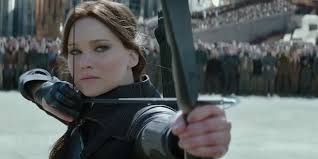
The Hunger Games series has been hugely successful recently and features a more positive female character. Jennifer Lawrence's Katniss Everdeen is brave, strong, able, has a defined character arc, is not sexualised (the films play on this in the ridiculousness of her pageant dresses) and crucially, not defined by her relationship with a man. In fact, the two male characters are such wet blankets at times that you feel the unfortunate love triangle is missing two points. What Katniss does to start the story off is done by her own decision, not influenced by a man. So there's some progress in the Young Adult market.
What really impressed me recently, however, was the representation of female characters in George Miller's Mad Max: Fury Road. This is impressive because given the title and history of the franchise, the sheer weight of expectation, you would not have seen it coming. One would expect a post-apocalyptic road movie in which a stoic hero fights for his own survival, perhaps saving a few locals on the way. Cars will be crashed, stuff will explode, and things will have weird names.


Well all of this is present and correct, but what Miller has brilliantly done is taken his own franchise and turned it into a story about a woman striking back against a hideously mutated patriarchal world. 'Mad' Max Rockatansky is a bit part player in his own film, has little story arc to speak of, barely gets to drive the War Rig, and is at no point superior to Charlize Theron's wonderful Furiosa. The fact that her name is echoed in the film's sobriquet Fury Road is telling. This is her film and that Miller has snuck a female-led story into a $150m franchise reboot (sadly) is daring but ultimately contemporary and necessary.
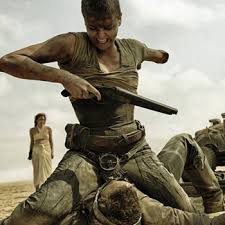
Let's look at the evidence. From the moment we see her, Furiosa is in control. A trusted lieutenant of the hideous tyrant Immortan Joe (Hugh Keays-Byrne), she is driving the prestigious War Rig vehicle on a mission to 'Gas Town' but quickly moves to see out her own plans. Yes, this is a female character in a major action movie with narrative purpose, goals and the means to achieve them without a man's help. Her goal? The rescue of Immortan's breeding partners, the Five Wives. Fitted with bladed chastity belts and ironically dressed in virginal white, sexual slavery is implied. One is pregnant with his child. That they are largely played by models and show a fair amount of flesh never feels gratuitous or exploitative (despite the franchise's roots). It feels like Miller knows exactly what he's doing, playing with expectation and imagery: while they are displayed as attractive we are also aware that they are rape victims, making us sympathetic to Furiosa's cause. We as an audience are never encouraged to see them as objects of desire. And Furiosa's motivation for doing this is all her own. The best explanation we get form her is “redemption”. For what, we don't get to find out but it's a fair bet that she's making up for being part of Immortan Joe's immoral world. It's also significant that she's the main driver of the War Rig, and a much better shot than Max; how often does that happen in an action film?


The design of Furiosa's character is important, too: female characters are typically sexualised or domesticated, and the rejection of this is reflected in how Furiosa looks. In short, she looks absolutely bad-ass! Close-cropped hair, face covered in engine grease make-up/war paint, and missing an arm, she is far from an objectified and sexualised character. She is cunning and driven and gets the better of her male counterparts on more than one occasion. Has her innate femininity been compromised to achieve this? Yes, to an extent. But more importantly her gender is less important than what the character does and how she is motivated
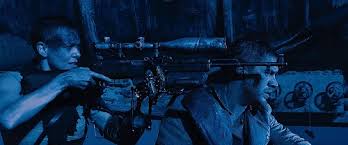
Looking at the gender balance of the whole film, men do not come off well. Aside from Max whose sole motivation is survival until necessity and conscience lead him to help Furiosa, only Nux (Nicholas Hoult) has anything other than an instinct for destruction. As the pregnant fifth of the Five Wives, The Splendid Angharad (Rosie Huntington-Whiteley) asks of Nux, “Who killed the world?” She's asking rhetorically, meaning all men. One of many nice touches of weirdness in the film is that Joe's army is called the War Boys, but this is also pertinent. Men, in the world of Fury Road are nothing but a destructive force, childishly clinging to the Norse (ironically, since the film is set in a desert) mythology used by Joe to keep his troops in line. Women, on the other hand, seek the mythic Green Place, one of the tribe they meet carries seeds and tries to grow plants, and they overall represent life, togetherness and hope.


My arguments here may be trumped by the film arguably reverting to type at the end, where Furiosa's life is saved by Max. This could be seen as satisfying that patriarchal urge that drives Hollywood to keep men on top (steady...). I disagree with this, though. Yes, Max battles the 'end of level boss' giant Rictus Erectus (Nathan Jones, making Bane look like Ghandi) and it's Nux's act of sacrifice that saves them all, but I would argue that these are dramatic beats rather than an ideological about face; after all, Furiosa gets to kill Immortan Joe. Max saves Furiosa by giving her a blood transfusion, giving part of him to her (steady...) via an umbilical connection rather than using his strength or saving her from a fall. This is a loving, almost motherly act from Max and the film steadfastly refuses to cop out with a romantic concession. Furiosa gets to a Green Place, saves the Five Wives and wins, and she probably would have managed it had she not bumped into Max anyway. Max gets nothing. He keeps wandering.
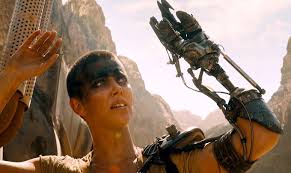
Fury Road is not alone. Marvel's latest, Jessica Jones is female-led and works well because of it; their next few properties include female heroes in Ant Man and The Wasp as well as Captain Marvel while DC are finally taking Wonder Woman seriously. Alongside this year's The Force Awakens, which gave us our first female Jedi (background characters aside) standing up to a powerful male opponent, Fury Road has tried to put an accepted pattern of gender roles in reverse. It isn't perfect and there is some way to go to redress a decades-long imbalance in film as a whole. But Miller has done something very important in hiding a feminine-led if not wholly feminist story inside a film where most viewers are probably just enjoying watching cars explode. Go men!

Sunday, 3 January 2016

My Top 10 Records Of 2015


It's that time again. I've listened to quite a lot of stuff this year and I've taken the time to go through what's been rocking my trusty iPod. Some of my favourite bands have released albums this year, and I've discovered some new stuff too. I like lists (appeals to my OCD, I suppose) so here's my list of what's been good for me in 2015.

There's probably a list to be made of the stuff I regularly skip - but this is way more fun!


10 – Faith No More – Sol Invictus

Rock's favourite perverts returned and followed some festival appearances with their first album in 18 years and it turned out to be well worth the wait. Varied, driven, and full of ideas, from the riff-driven 'Superhero' and 'Cone of Shame' to the unpredictable 'Black Friday' and eerily nice 'Sunny Side Up', this album had a bit of everything. Extra credit is given to any major band who release a comeback single called 'Motherfucker'.

9 – Palm Reader – Beside The Ones We Love

Falling somewhere between the technical savagery of The Dillinger Escape Plan and the tortured fury of Converge, this Woking based quintet released an album that could make you want to mosh like crazy and feel their pain at the same time.

8 – Napalm Death – Apex Predator, Easy Meat

It would be doing them a disservice to call Napalm Death consistent: they churn out a great album every few years and have been doing so, perhaps a mid-period lull aside, for over 30 years, but they never rest on their laurels enough to be called 'consistent'. That a band can remain this committed, furious and inventive for so long is admirable and this latest effort keeps the bar nice and high. This time they've tried some sinister slow stuff which slots in nicely alongside their trademark breakneck tempo shifts and frantic riffs. Keep it up, guys.

7 – Gallows – Desolation Sounds

Changing their singer (and releasing a dour 2nd album) has certainly dented Gallows' momentum in terms of popularity but on the strength of 2012's eponymously titled third album there is plenty left in the tank. On this, their 4th record, Alexisonfire's Wade McNeil continues to prove what a talent he is; more versatile and his predecessor, his voice flourishes on songs like 'Bonfire Season' and 'Death Valley Blue' while the songs have also become more interesting. Far from being a straight-up punk record, they have developed some twisted riffs ('Leviathan Rot'), epic choruses ('Bonfire Season'), while keeping the same bitter fury they always had ('Leather Crown').

6 – Refused – Freedom

The 2nd band on the list to have reformed after breaking up in 1998, Refused are back and as angry as ever. Not so much a hardcore band any longer (1998's The Shape Of Punk To Come put paid to that), Refused's comeback album mixes riff-driven rockers, industrial-style repetition and upbeat funky guitar to make a fine collection of tunes. Top tune here is post-colonial criticism 'Francafrique', using a quote from Conrad's Heart Of Darkness, chanted by children, to unsettling effect, totally incongruous to the upbeat tune. Genius.

5 – Hawk Eyes – Everything Is Fine

I saw up and coming Leeds band Hawk Eyes open for Black Spiders a while back and I was impressed enough to pick up their 2012 album Ideas. This, the brilliant follow-up, sees them fulfil their considerable potential. Think of the heavier elements of Britrock: off-kilter riffs, great hooks and memorable choruses, Hawk Eyes show their influences and push beyond them. They sound full of confidence here and rightly so.

4 – Baroness – Purple

A late arrival in the year, Baroness followed up their 2012 double album (and a horrific near-death experience) with a further progression of their sound, further away from the angry Mastodon imitations of their early records, even ditching some of the 70s prog from last time to make something immediate, uplifting and fun.

3 – Clutch – Psychic Warfare

After rediscovering their mojo on 2012's Earth Rocker, Maryland's finest non-cookie based export returned with another rock and/or roll masterpiece. Quite what Neil Fallon drawn on for lyrical inspiration is beyond me but when he can pull bonkers tunes like 'X Ray Visions' and 'Firebirds', I'm just pleased that it exists. Clutch are the finest of rock bands right now: riffs, choruses, the tightest damn rhythm section, and just enough weirdness to stand out from the crowd. Brilliant as ever.

2 – Therapy? - Disquiet

My favourite band have been on form of late, with Crooked Timber and A Brief Crack Of Light being among the best records of their career. They took their time with Disquiet and it was worth the wait: opening song and first single 'Still Hurts' is a barrage of riffs and pain, Andy Cairns' personal brand of darkness still the catalyst and missing ingredient that sets them aside from everyone else. 'Tides' is an infectious hit-that-will-never-be, 'Deathstimate' rides a monster riff, hiding an atmosphere of gloom and mortality and 'Helpless, Still Lost' is among my top 3 songs of the year. This is an album for people who embrace the dark side of themselves and see the world through that prism. It doesn't sound like an album from a band 25 years into a career but that's exactly what it is, and I count myself lucky to be one of their fans that are still paying attention.

1 – Enter Shikari – The Mindsweep

Well, this one surprised me. I hated these guys when they started up; they seemed like arrogant posh kids, too cool for school and the band du jour of hipster teenagers. I hated them. Until a few years back when I heard 'Arguing With Thermometers'. Here was a rock song that kids could dance to, while learning about climate change; a message and a sense of humour in one danceable package, it was smart, fun and it rocked. I started paying attention and I'm glad I did. Always a crossover band, Enter Shikari have evolved from writing rock songs a throwing in a bit of dubstep or some trance keyboards; those elements are still there but now feel more organic and they are a more rounded band because of it. The sheer quality of the tunes on offer here has made it my number one of the year. 'Anaesthetist', 'The Last Garrison' and 'Torn Apart' are anthems; big on choruses and full of strong messages, catchy and important. The epic 'Myopia' and slow burning 'The Bank Of England' would have been filler material on their previous records, but here they are standouts. The change in this band has been a long time coming but they're finally hitting the heights.

I once heard Enter Shikari dismissed as Lostprophets imitators. I never bought into that logic even though I was never a Shikari fan. Even when people still liked them (long before their singer started doing private gigs in prison), Lostprophets could never dream of being this inventive, intelligent and fun. I love being proved wrong, and it seems I was wrong to dismiss these guys.


So there's my top 10 of the year. There were some bands who remained consistent without pushing any boundaries (Lamb Of God, Slayer, High On Fire), some who have taken a couple of steps backwards (Torche, Cancer Bats), and some who have narrowly missed out on being on this list (Rolo Tomassi, Slaves). Special mention must go to Funeral For A Friend; formerly favourites of mine, their latest record was less than great and they've decided to bow out gracefully. A shame, but admirable.

Thursday, 17 December 2015

Double Bill: Stranger Than Fiction and The Secret Life of Walter Mitty


Double Bill: 
Stranger Than Fiction and The Secret Life of Walter Mitty


I had every reason to suspect that I would hate Stranger Than Fiction (Marc Forster, 2006) and The Secret Life Of Walter Mitty (Ben Stiller, 2013 – the remake better suits my purposes!): both star actors that I go from not really minding to actively disliking, depending upon he direction of the wind; both appeared to be deliberately faux-indie major studio releases, striving to be cool with hipster soundtracks and muted colour schemes; both are about stuff that I didn't think I'd find interesting. I have rarely been more delighted to be proved wrong! These are two surprisingly good low-key comedies starring two of today's biggest stars of comedy, who, love them or hate them, turn in sterling against-type performances in films about how the little things can reveal the big picture. Together, they'd also make a fine evening's viewing.
Image result for secret life of walter mitty
Both films revel in their metaphysical leanings, carefree tinkering with film form and playful double entendre titles that become clear as the stories progress. Mitty shows Ben Stiller's titular hero's flights of fancy writ large onscreen, playing out his fantasies and mixing them with his actual adventures which are often just as fantastical, the effect being that you are often swept along with how joyfully ridiculous the story gets, without ever really questioning it. Fiction opts for a more structured conceit, where Will Ferrell's dull tax auditor Harold Crick's life is interrupted by its own narration, which only he can hear, and describes incidents varying from his morning routine to his untimely death. This creates an interesting dramatic tension: is Crick imagining the voice narrating his life (personified by Emma Thompson's troubled author), or is he the product of the narrator's imagination and bound to her every whim, even if it means his death? This is a film that is a Freudian slip away from being a Charlie Kaufman/Spike Jonze collaboration.

Despite my misgivings about the stars, Ferrell and Stiller play against type and in doing so make their characters hugely likeable. I am not a fan of their more slapstick tendencies and it's refreshing to see them stretch their other comedy muscles with deadpan and fantastic timing. Both play dull-but-likeable men stuck in loveless routines of jobs but over the course to the films, both learn to grab life by the scruff of the neck and write their own script or live out their fantasies respectively. Both are played out at a satisfying pace, allowing the characters to evolve naturally despite the more fantastical aspects at work. The one exception to this is Maggie Gylenhaal's love interest for Ferrell. She does good work with an interesting-if-underused character but the softening of her spiky exterior is too fast and smells a little of narrative convenience.
Image result for stranger than fiction
These are two films that are directed affectionately and with a quirky indie sensibility. Stiller throws in bizarro moments like an entire sequence set in Greenland culminating in Kristen Wiig's eminently loveable love interest Cheryl singing Bowie's 'Space Oddity'. Fiction director Marc Forster, the man responsible for the one recent Bond film that nobody liked, fills his film with keenly observed details (a couple lie in bed, his face lying nose-to-nose with the silhouette of hers), thoughtful framing and almost expressionistic scenery (the IRS records room is something from an unmade Kubrick film about taxation). If you look for them, there are nuggets of cinematic gold in two fairly understated films.


As the narratives deal with blurred lines between fiction/fantasy and reality, ultimately setting on the real, the here and the now, these are films you can get lost in; films that you can sit back and smile at. As each reaches its final denouement, the 'reveals' (the end of Crick's story, the reveal of Mitty's lost photograph) we feel like we've been on the same journey as the character, feel more positive about life, more passionate, more willing to do stuff; we just feel more. Ultimately, these films are thoroughly enjoyable marriages of major stars playing against type but totally on form, with directors (in Stiller's case, himself) who 'get' the material and know how to make it sing. Do yourself a favour and set aside a few hours to get lost in the narrative.